Celebration in Southwark Park
- 11:00 – Event opens with
- Food stalls
- Norwegian vendors
- Children activities
- Bouncy castle
- 12:00 – Music from the main stage: Robert Post
- 13:00 – Official welcome greetings from the Committee chair, & National Anthem
- 13:15 – 17. mai procession around Southwark Park, start and finish by the main stage
- 14:00-16:00 – Children’s actitivies and football organised by the School
- 14:05 – Main speech
- 14:15 – Music from the main stage: Songleikr
- 15:00 – Music and speeches by The Norwegian School and Lørdagsskolen
- 15:30 – Music from the main stage: 8lanco
- 16:30 – Music from the main stage: LEAH
- 17:30 – Event closes
Norwegian Church, 1 St Olav’s Square
Free attendance
11.00 Church Service
12.15 Coffee, waffles and refreshments
12.30 Wreath laying at the King Haakon Statue, music by Regent Brass
12.40 Departure for Southwark Park
The church is open until 16:00

Den Norske Klub, Evening Event
4 St James Square, London SW1Y 4JU
Time: 18:30
Dress code: Black tie/bunad
Three course dinner + Champagne
Attendance open for all. Email to reserve a spot: secretary@dennorskeklub.co.uk


History of the 17 May Procession
It was primarily Henrik Wergeland who in his speeches and poems made 17 May a truly national day in ever wider circles in the Norwegian people.
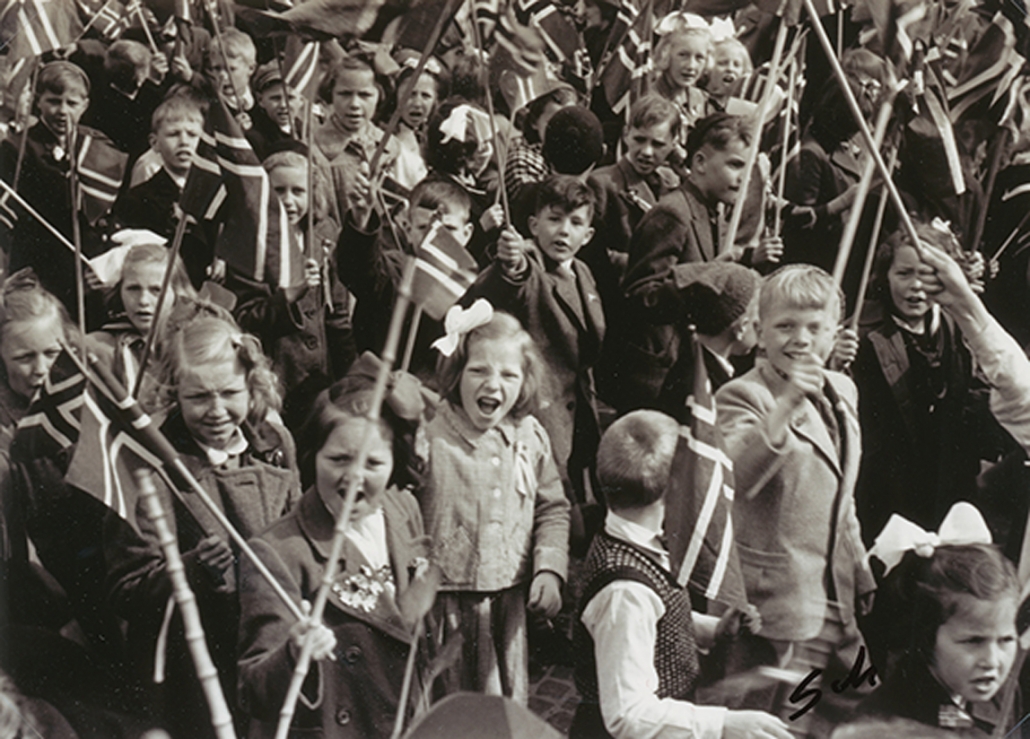
The modern 17 May celebrations owe much to the poet Bjørnstjerne Bjørnson. Inspired by earlier local efforts, Bjørnson helped launch the first national children’s parade in 1870. The year before, his friend P. Qvam—a school headmaster—had organised a small march for his pupils. This first official parade, then known as the “Little Boys’ Flag March,” saw nearly 2,000 boys walk through the streets. The custom soon spread to every school in the country.
While traditional “citizens’ parades” for adults have faded, the children’s parade is now the heart of the day. Since 1906, the Royal Family has stood on the balcony of the Palace in Oslo to greet the passing children. They have done this every year, with the exception of the 1940–1945 occupation.
During the Second World War, the occupying forces banned the parade and forbade people from wearing the colours of the Norwegian flag. Consequently, when Norway was liberated on 8 May 1945, the flag became an even more powerful symbol of national freedom.
The day traditionally also features the “Russ”, Norwegian graduating college students (typically found wearing characteristic red, blue or black clothing). This tradition began in 1905 when students first wore distinctive caps to mark the end of their studies. While the celebrations have changed over the decades, the Russ still play a vibrant part in the festivities today.